.png)
Fungal networks: careers in mycology
By Mark Ramsdale, Head of Training at the MRC Centre for Medical Mycology, University of Exeter
Every year, UK Fungus Day celebrates the remarkable world of fungi. From mushrooms in forests to yeasts used in bread, beer, and medicine, fungi shape our lives in ways many people never realise. Yet behind these discoveries and innovations are specialists known as mycologists - scientists and professionals who study and work with fungi.
For anyone fascinated by biology, nature, the environment, medicine or even food, jobs working in mycology offer some of the most diverse and rewarding career paths in science. Mycologists help solve real-world problems while studying one of the most fascinating kingdoms of life on Earth. And yes, if they are lucky, sometimes they get to spend hours in muddy woods staring at rotting logs in the rain!
Why would you want to be a mycologist?
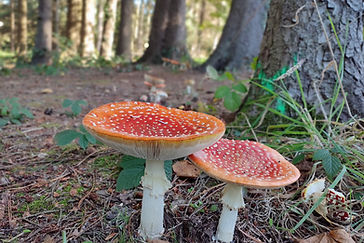
Fungi are everywhere. They recycle nutrients in ecosystems, help plants grow, produce antibiotics, ferment foods and drinks, and can also cause devastating diseases in humans, animals, and crops. Despite their importance, fungi remain one of the least understood groups of organisms.
Being a mycologist means exploring a hidden kingdom of life that still contains millions of undiscovered species. It is a field full of opportunities for people with curiosity for the natural world and for those who want to make a real-world impact.
Image: Mike Gunning
Many people are drawn to mycology because it can combine outdoor exploration with cutting-edge laboratory science. You might take up a career collecting mushrooms in a woodland, analysing fungal DNA, diagnosing and treating infections in hospitals, or developing sustainable technologies using fungal materials. Mycologists can play important roles in addressing many global challenges.
What do mycologists do?
The work of a mycologist depends on their specialism. Some focus on identifying fungi and understanding their biology, while others investigate how fungi interact with plants, animals, and humans. Medical mycologists study fungal infections such as aspergillosis, candidiasis, and ringworm. Plant and agricultural mycologists investigate crop diseases caused by fungi. Their work helps protect food supplies from pathogens that damage wheat, potatoes, bananas, and many other crops.
Environmental mycologists study the role of fungi in ecosystems and in our homes. They examine how fungi decompose organic matter, support forests through mycorrhizal partnerships with plants, and respond to environmental change. Industrial mycologists work with fungi used in biotechnology and manufacturing. Fungi are used to produce antibiotics, enzymes, biofuels, food products, and even sustainable packaging materials.
Where do mycologists work and what are their roles?

Image: Inside a brewery.
https://commons.wikimedia.org/wiki/File:Black_Sheep_Brewery_Tour.jpg
Mycologists work in many different settings. Universities and research institutes employ mycologists in teaching and research roles where they may supervise student projects, publish scientific papers, and conduct laboratory or field-based research. Hospitals and healthcare laboratories employ medical mycologists and biomedical scientists who diagnose fungal infections and support patient care. Government agencies and environmental organisations use fungal experts in conservation, biosecurity, and agriculture. In the private sector, biotechnology and pharmaceutical companies employ mycologists to develop medicines, industrial enzymes, sustainable materials, and fermentation technologies.
Some mycologists work in museums, botanical gardens, or herbaria maintaining fungal collections and supporting biodiversity research. Others work independently as consultants, surveyors, educators, or scientific communicators.
Whilst many mycologists work mainly in laboratories, others spend large amounts of time outdoors conducting fieldwork. Increasingly, computational and genomic approaches mean that some mycologists specialise in analysing large biological datasets using bioinformatics.
Because fungi affect nearly every ecosystem and industry, fungal expertise is increasingly valued worldwide.
I have often been asked what specific jobs mycologists do. So here is a list of examples:
-
Agricultural adviser
-
Bioinformatician
-
Biomedical scientist
-
Biotechnology scientist
-
Book writer
-
Brewer
-
Clinical scientist
-
Ecologist or conservation officer
-
Environmental consultant
-
Food production developer
-
Food production quality assurance monitor
-
Laboratory technician
-
Lecturer or university academic
-
Natural History Museum curator
-
Pharmaceutical researcher
-
Plant pathologist
-
Research scientist
-
Science communicator
-
Scientific illustrator
What opportunities are there in mycology?

Mycology is a surprisingly broad field with opportunities in multiple areas of science, healthcare, industry, conservation, and education.
Researchers in mycology may study fungal genetics, ecology, immunology, evolution, or drug resistance. Healthcare careers include clinical scientists, biomedical scientists, infection specialists, and diagnostic laboratory staff working with fungal diseases. Agricultural and environmental careers involve crop protection, plant pathology, forestry, conservation, and ecological surveying. Biotechnology is a rapidly growing area: companies are increasingly using fungi to develop sustainable materials, grow alternative foods, and discover new pharmaceuticals. Fungal biotechnology has become particularly exciting in areas such as mycoprotein foods, leather alternatives, and biodegradable materials.
Image: illustration of Suilleus variegatus
There are also opportunities for mycologists in publishing, scientific illustration, public engagement, and wildlife conservation. Enthusiasts with strong photography and identification skills may contribute to fungal recording schemes and citizen science projects.
What may be surprising is the number of opportunities mycologists get to travel around the world. If you choose the subject of your investigations carefully e.g., cultivation potential of Lentinula madagasikarensis as an edible mushroom species, you may find yourself on regular trips to Madagascar - the only place this species is found! Whilst exotic travel can be important for field work and seeking out new research opportunities, it is also important for collaborating with colleagues in the worldwide mycological community and sharing your knowledge and expertise with new audiences.
A surprising number of academic mycologists have risen through the academic ranks to take on lead institutional roles. Perhaps this is because of their inherent creativity, solving the mysteries of fungal biology often requires flexible thinking outside of the box. Senior academics often have key interpersonal and core administrative skills suited to these high-profile jobs. This may come as a surprise to those who think that mycology and lab work is just about “working at the scientific coal face” but many mycologists will have run large laboratories that require strict adherence to policy rules and regulations, that have required stringent risk assessments, management of diverse teams of and shave a strong track record of securing significant budgets.
What skills do mycologists have?

Image: Gloved hand holding a petri dish growing a culture of Aspergillus niger.
https://commons.wikimedia.org/wiki/File:Aspergillus_niger_growth_on_SDA.jpg
Core laboratory skills may include culturing fungi, microscopy, molecular biology, DNA sequencing, and diagnostic testing. Fieldwork skills are valuable for environmental and ecological mycology. These include surveying, sampling, species recording, and environmental monitoring.Communication skills matter too. Mycologists often work in multidisciplinary teams and must explain their findings to colleagues, policymakers, healthcare professionals, farmers, or the public.
Research and analytical skills are central to many mycology careers. Scientists need to design experiments, interpret data, and communicate findings clearly. Modern mycologists also increasingly use computational skills such as statistics, coding, genomics, and bioinformatics. Importantly, mycology develops problem-solving abilities that are highly transferable to many careers beyond fungal science. Observation and identification skills are particularly important. Many fungi look similar, so careful attention to detail is essential when examining microscopic structures, colony growth, or field characteristics.
How much do mycologists get paid?
Everyone wants to know the bottom line. Although few people become mycologists purely for financial reasons, the field offers meaningful careers with some opportunities for progression and advancement. As with any career, salaries vary depending on experience, qualifications, and the specific sector you work in. As a guide in the UK, early-career laboratory technicians or research assistants may earn around £24,000–£32,000 per year. Biomedical scientists and clinical laboratory staff often earn between £30,000 and £45,000 depending on seniority and NHS banding. University lecturers and experienced research scientists commonly earn between £40,000 and £65,000 or more. Senior academics, industry scientists, and biotechnology specialists in the private sector may earn higher salaries.
How do you become a mycologist?
There is no single route into mycology, which is perhaps one of the strengths of the field. Most professional mycologists begin with a degree in biology or a related subject such as microbiology, biotechnology, biomedical science, plant science, ecology, or environmental science. Few universities offer specialist modules or postgraduate programmes in mycology, so mycologists must often have the personal drive to find out more for themselves.
Practical experience is extremely valuable. Joining local fungus groups, attending fungal forays, volunteering with conservation organisations, or contributing to citizen science projects can help develop identification skills and professional networks. Students interested in medical mycology may pursue postgraduate study or clinical laboratory training. Those interested in ecology or conservation often gain field experience through environmental organisations or recording schemes. Developing core microscopy, molecular biology, and data analysis skills can certainly strengthen career opportunities.
Perhaps most importantly, successful “career” mycologists are curious - they enjoy discovery, observation, and learning about a kingdom of life that remains full of mysteries. Whether you are interested in medicine, nature, sustainability, biotechnology, or scientific research, careers in mycology offer opportunities to make a genuine difference while studying some of the most fascinating organisms on Earth.
Further reading and inspiration
-
Careers at the MRC Centre for Medical Mycology. Leaflet available from the centre on request or find about the mycologists at the Centre for Medical Mycology
-
Fun with Fungi Mycology Careers
-
LIFE Worldwide ES - Mycology Jobs and Careers
-
Kew Endeavour - Mycologist